What should you do first?
Wash your face and dry it before opening the mask. Leftover makeup or sunscreen can leave patches where the mud won't spread evenly.
Tie your hair back, especially if loose strands keep falling across your forehead. Wash with your usual gentle cleanser, then pat your face dry with a clean towel. No scrubbing beforehand.
Trying a mud mask for the first time? Patch-test it according to the package directions before covering your whole face. Fragrance or other active ingredients can irritate skin that doesn't tolerate them well.

What should you have nearby?
- A clean towel.
- Your usual gentle cleanser and a clean fingertip or mask brush (you'll want something easy to rinse afterward).
- Already have your regular facial moisturizer ready?
- A clean, dry face before you begin.
How do you apply it?
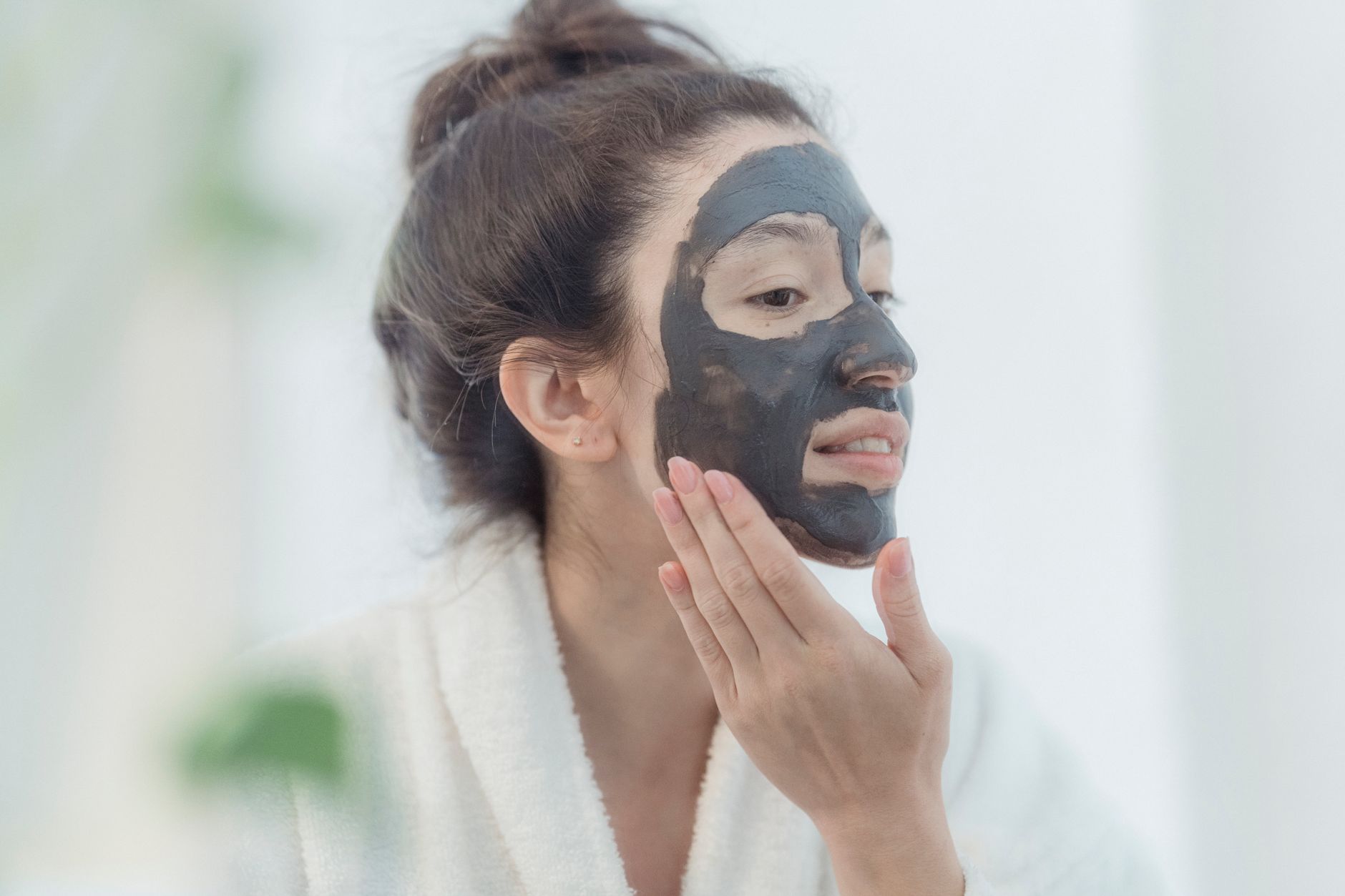
Spread a thin, even layer across your face and leave the delicate areas bare. Piling on extra mud won't improve the results, and you'll have more to rinse off.
With clean fingers or a dedicated mask brush, spread the mud across your cheeks, forehead, chin, and nose. Stay clear of your eyelids and lips, as well as any broken or irritated skin.
Pay attention to your hairline and jaw. Mud tends to collect around those edges, so leave a little breathing room instead of pushing it right up to your hair. Follow the directions for your particular formula.
A few application tips
- Keep the layer thin.
- Your eyelids need to stay clear, even if you're trying to cover every last patch of skin.
- Rubbing it in? Don't. Spread it gently instead.
- Does your nose tend to get irritated? Leave a thinner layer there.
How long should it stay on?
Stick to the wear time on the package. Leaving a mud mask on longer won't necessarily improve the results, and your face could end up feeling dry or uncomfortable.
Set a timer before you wander off to get dressed or do something else. Some mud masks are made to stay moist, while others dry much faster. Your own product's instructions are the ones to follow.
Your face doesn't need to feel stiff before you rinse. Cracking and pulling around your cheeks aren't signs that the mask is working better. If you feel burning, strong itching, or unusual discomfort, wash it off straight away.
What should you watch for?
- Check the package first.
- Watch for that tight, uncomfortable feeling around your cheeks while the mask sits.
- Burning or strong itching? Rinse immediately.
- Don't wait for cracks.
How do you rinse it off?
Wash it off with lukewarm water, then reach for your regular moisturizer. There's no need to scrub your face to get every bit of mud off.
Wet your fingertips and gently loosen the dried mud with small movements. Splash with lukewarm water until it's all gone, especially around your nose, jawline, and hairline. Stubborn patches aren't worth scraping with your nails or a rough washcloth.
Pat your face with a clean towel, but leave it slightly damp. Smooth on your usual facial moisturizer while your skin still feels a little moist. During the day, finish with your regular broad-spectrum SPF 30 or higher sunscreen.
Once the mask is off
- Not hot water.
- Rinse until you can't see any mud around your nose or hairline.
- Pat your face dry rather than rubbing it with the towel.
- Is your skin still slightly damp? That's the time to moisturize.
How often should you use it?
Start with once a week, then adjust based on your skin and the package directions. If your face feels tight, dry, or irritated afterward, leave more time between applications.
Not every mud mask has the same formula. Some contain extra exfoliating ingredients or fragrance, while others are much simpler. Pay attention to how your own skin feels instead of assuming that using a mask several times a week will work better.
Go easy on exfoliation during your first few applications. Already using retinol or exfoliating acids? Check the instructions and be cautious about combining them with a mud mask on the same evening.
Stop using the mask if irritation keeps coming back. If you have persistent irritation, an allergic reaction, or an existing skin condition, speak with a qualified dermatologist or another healthcare professional before trying it again.
A few habits to keep
- Once a week to start.
- The package instructions should guide how often you use it, even if your skin seems fine after the first application.
- Skin feeling irritated? Give the mask a miss.
- Don't layer on other exfoliating products.
People also ask
Skincare FAQ
Should you use a mud mask before or after moisturizer?
Before moisturizer. Put the mask on clean skin, rinse away all the mud, then smooth on your regular facial moisturizer.
Can you use a mud mask every day?
No, don't start with daily use. Your skin can become dry or irritated, especially with formulas containing exfoliating ingredients. Begin once a week and follow the package directions.
Should a mud mask dry completely?
No, it doesn't need to crack or feel painfully tight. Follow the timing on the package and rinse when directed, even if the mask still feels slightly damp.