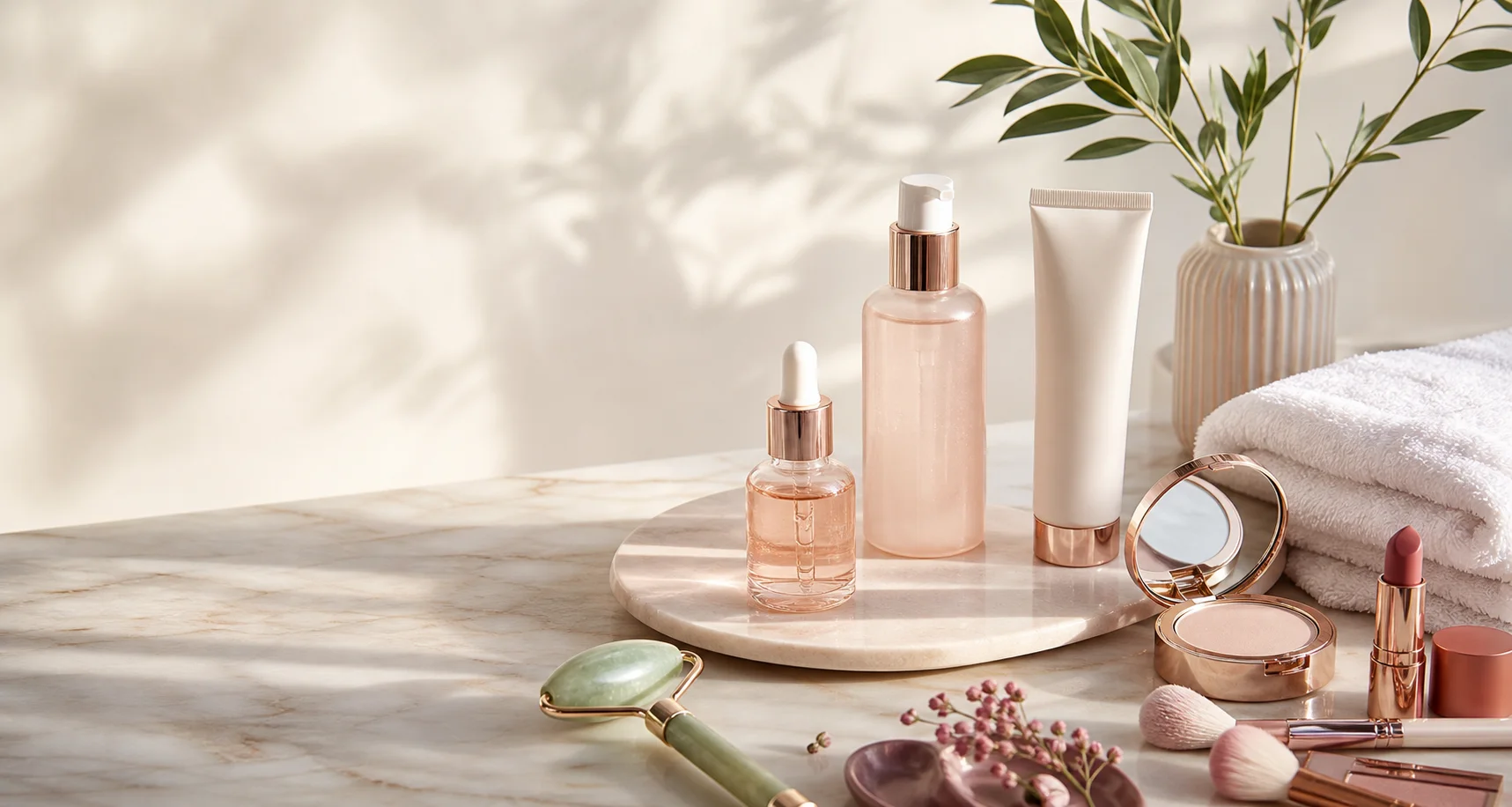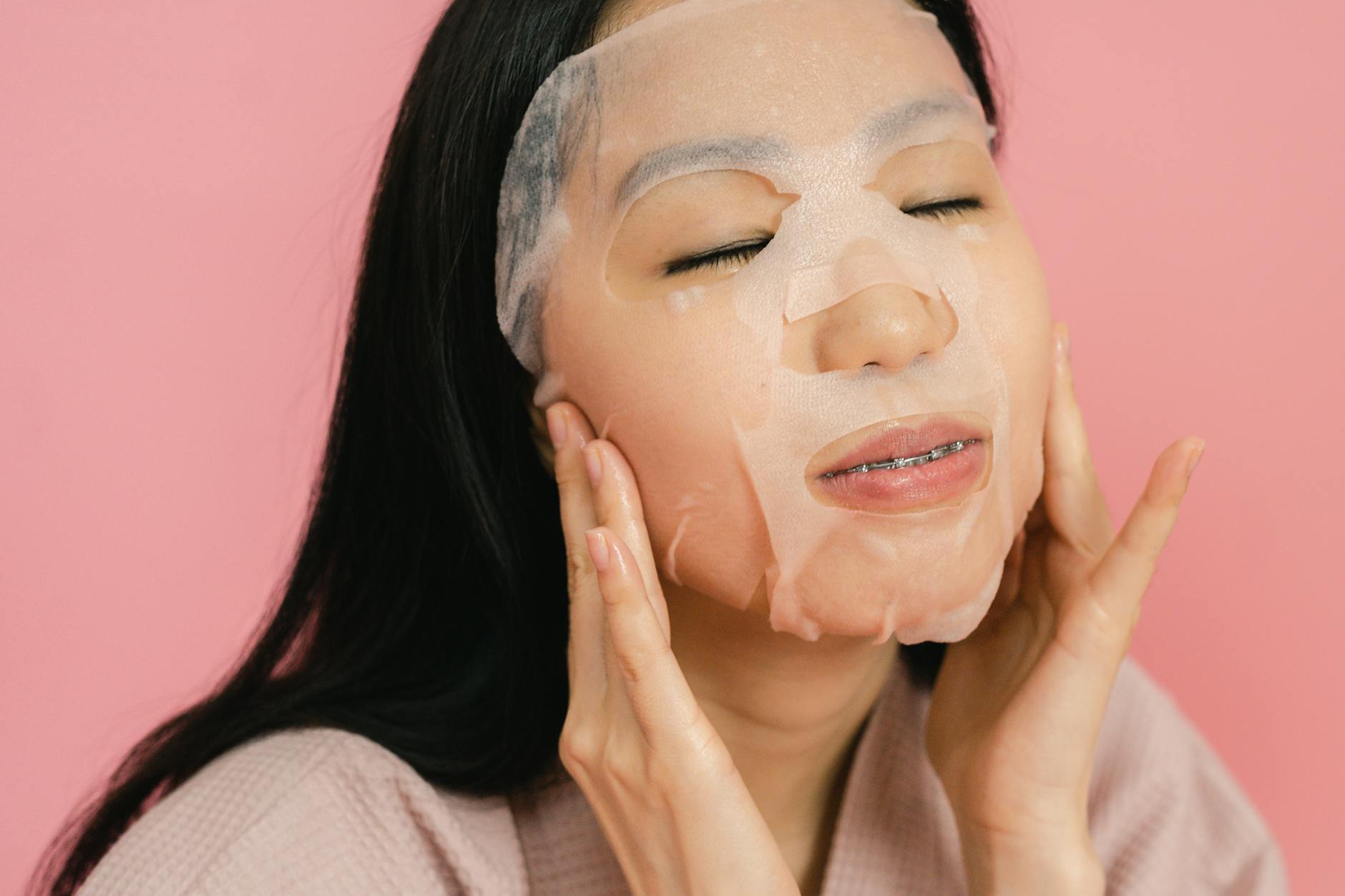
What should you do first?
Wash your face and pat it dry before opening the mask packet. That's all you need to do first.
Put your sheet mask on after cleansing, not over sunscreen, makeup, or the oil and sweat from the day. Wash with your usual gentle cleanser, rinse with lukewarm water, then pat your face dry with a clean towel.
Take a minute to read the ingredients. If fragrance, essential oils, or another ingredient has irritated your skin before, don't assume this mask will be any different. Skip it if your skin is broken, freshly irritated, or sunburned.
What should you have nearby?
- Clean hands first.
- A clean towel is handy when you wash your face and need to dry it before opening the packet.
- Makeup still on? Remove it, along with your sunscreen.
- Have you read the packet directions? Check the recommended wearing time before you start.
How do you put it on?
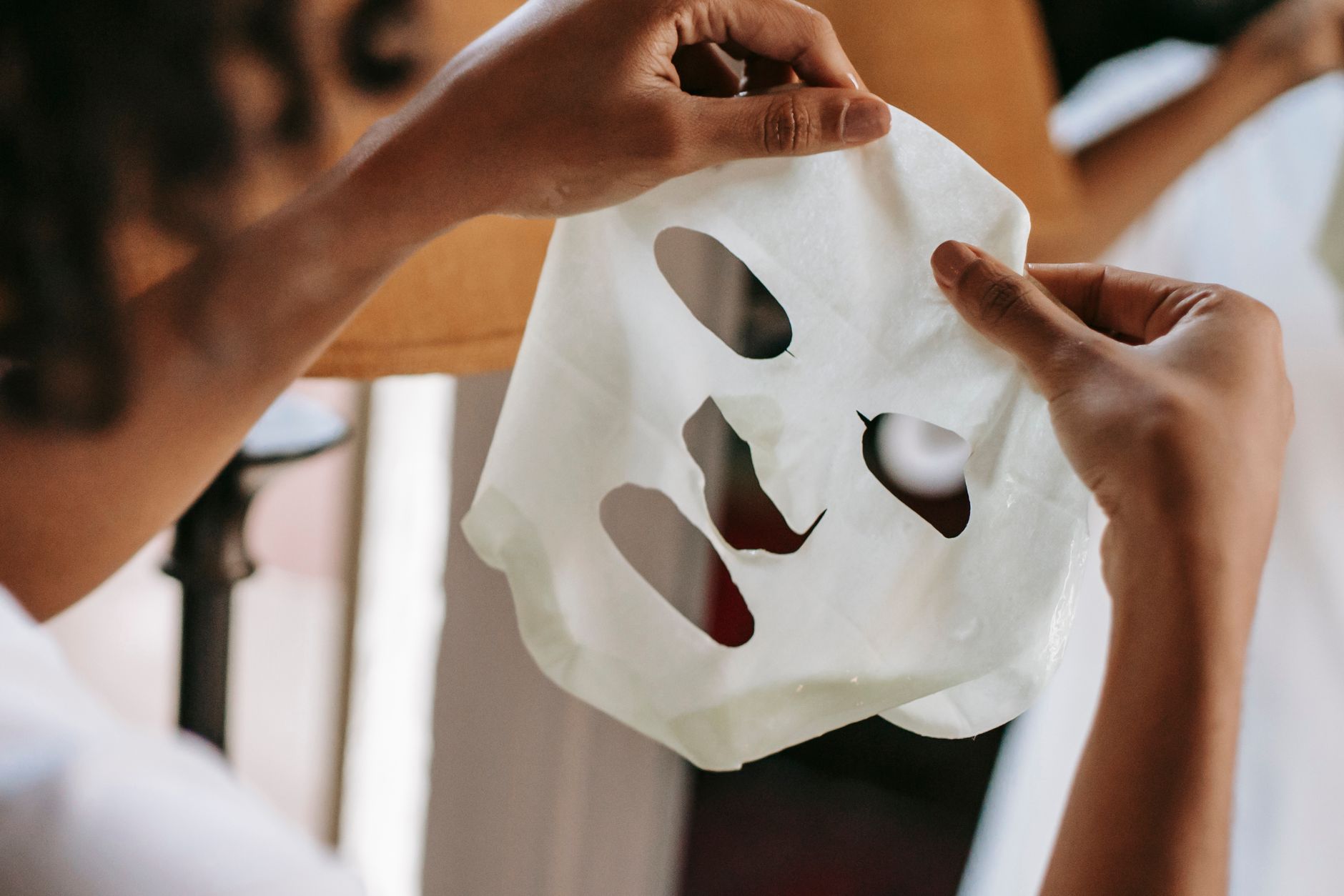
Unfold the mask gently and line up the eye and mouth openings with your face.
Most sheet masks arrive folded and soaked in serum. Take yours out slowly so the thin material doesn't tear. Separate the folds with your fingertips, then position the eye and mouth openings before smoothing the mask over your forehead, nose, and cheeks.
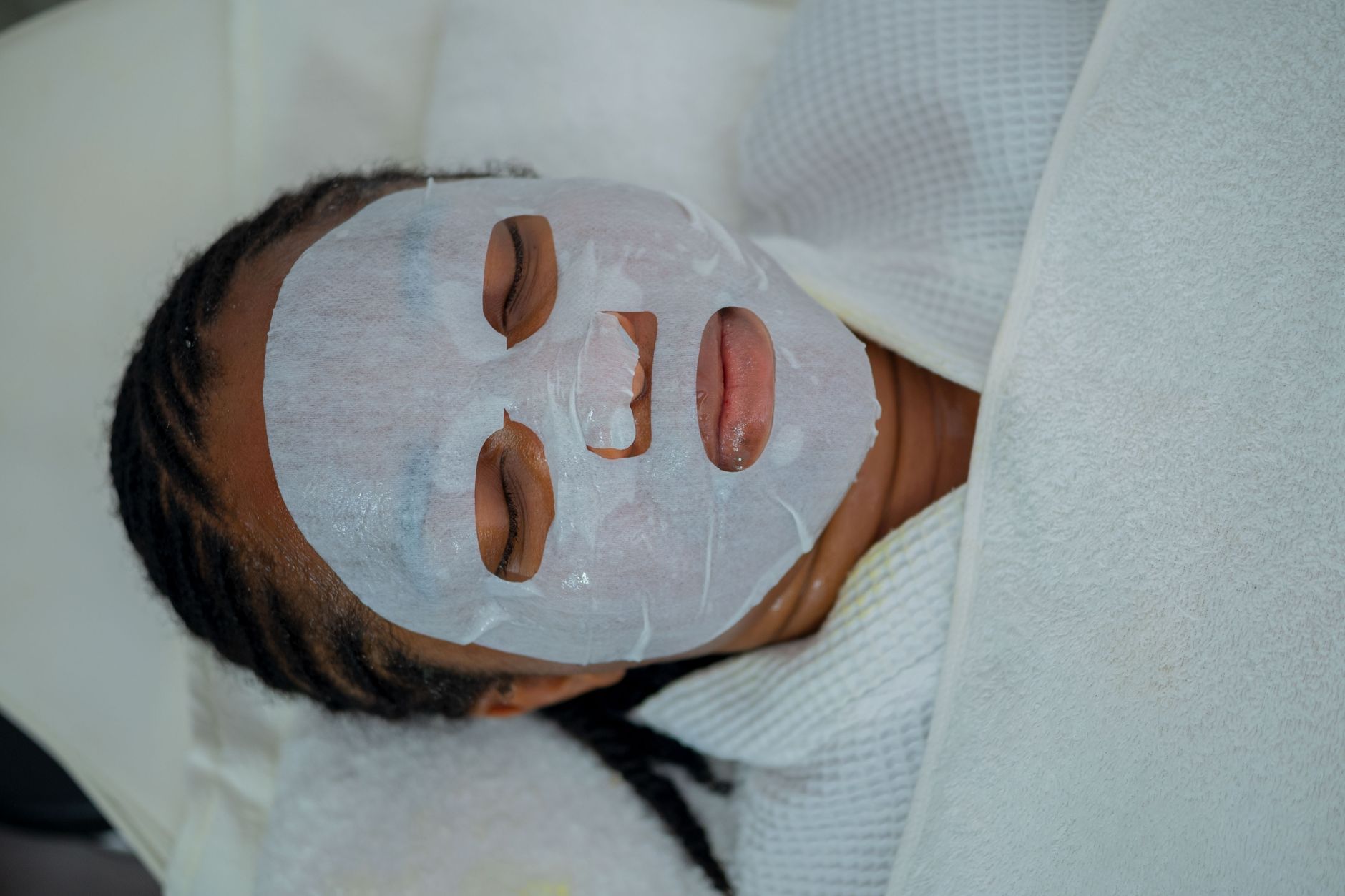
Work outward with your fingers to smooth the sheet against your skin. Press out any large air pockets and adjust the edges around your nose and jaw. A few small folds are fine if the mask is too big. Just don't pull it tight or stretch it until it tears.
Does the mask fit properly?
- Eye holes aligned.
- Smooth the material over your cheeks with your fingertips (small wrinkles are nothing to worry about).
- Are your nostrils clear?
- Keep the serum away from your eyes, even when adjusting the edges.
How long should it stay on?
Stick to the packet directions. Most sheet masks stay on for around 10 to 20 minutes.
Set a timer once the mask is sitting comfortably on your face. The recommended time depends on the product, so follow its instructions rather than guessing. Most standard sheet masks are made for a short session, not a whole evening.
Take the mask off while it's still damp. Once the material dries out, your skin can start feeling uncomfortable. Don't fall asleep wearing a regular sheet mask or leave it on longer just because there's serum left in the packet.
What should you do while wearing it?
- Timer set.
- Get comfortable in your chair or recline somewhere you can relax for a few minutes.
- Does the sheet feel uncomfortable? Don't rub or massage it against your face.
- Take it off before the material dries.
What should you do afterward?
Gently pat the leftover serum into your skin, then finish with your regular moisturizer.
Peel the sheet away gently, starting at your chin or forehead. There's no need to scrub your face with it. If serum is still sitting on your cheeks, forehead, or neck, press it into your skin with clean fingertips.
You usually don't need to rinse after a sheet mask unless the packet says otherwise. Let the serum settle for a moment, then apply your regular moisturizer to keep your skin comfortable. Heading outside in the morning? Finish with sunscreen as your final skincare step.
There's often plenty of serum left in the packet. Spread a little over your neck or hands if you like. Throw away the used sheet afterward. Don't save it for another application.
What goes into your aftercare?
- Pat in the leftover serum.
- Your usual moisturizer goes on after the serum has had a moment to settle.
- Morning plans? Finish with SPF 30 or higher before heading outside.
- Throw the used sheet away.
How often should you use one?
Follow the packet directions and pay attention to how your skin feels afterward. You don't need a sheet mask every day.
Once or twice a week is a reasonable starting routine for a mask your skin already tolerates. Still, read the ingredient list and packet directions before settling into a schedule. Not every sheet mask is made for the same frequency.
Be more careful with masks containing exfoliating acids, retinol, or strong fragrance, especially if you're already using active skincare products. Layering several potentially irritating products on the same evening can leave your face red or uncomfortable. Stop using the mask if you notice burning, itching, or redness that doesn't go away.
If irritation keeps returning, you think you're having an allergic reaction, or you already have a skin condition, talk with a qualified dermatologist or another healthcare professional before trying more masks.
How can you keep it simple?
- Start once weekly.
- Pay attention to redness or itching after each mask, especially if you've recently added another skincare product.
- Already using strong active ingredients?
- Stop using the mask if your skin starts reacting.
People also ask
Skincare FAQ
Should you wash your face after a sheet mask?
Usually, no. Pat the leftover serum into your skin and follow with moisturizer. Rinse only if the packet tells you to or your skin feels irritated after removing the sheet.
Can you use a sheet mask every day?
Usually, 1 to 3 times a week, depending on the formula. Check the packet first, then try one application and see how your skin feels the next day. Gentle hydrating masks can suit more frequent use, but exfoliating acids and retinol need extra care.
Can you reuse a sheet mask?
No, a sheet mask is for one use only. Throw it away after removing it, even if the material still feels damp or there's serum left.