Quick answer
You don't need to wash your hair or start styling all over again. Slightly damp hands and a tiny bit of lightweight leave-in conditioner or serum can tame those fuzzy bits. Keep everything away from your roots. Start small, because adding more is easy, but getting greasy hair back to normal isn't.
What should you do first?
Start with clean hands and figure out exactly where the frizz is.
Don't cover your whole head just because the crown looks fluffy. Check around your part, temples, crown and ends. Chances are, only a few sections need attention.
Rub your palms together and gently skim them over the fuzzy areas. Hair feeling dry and staticky? Dampen your hands with a little water first. They should feel barely moist, not wet enough to soak your hair.
What should you check?
- Separate loose flyaways.
- Do the ends feel rough or dry? Pay attention to those before touching the smoother lengths.
- Slightly damp palms.
- Leave smooth sections alone.
Which product should you use?
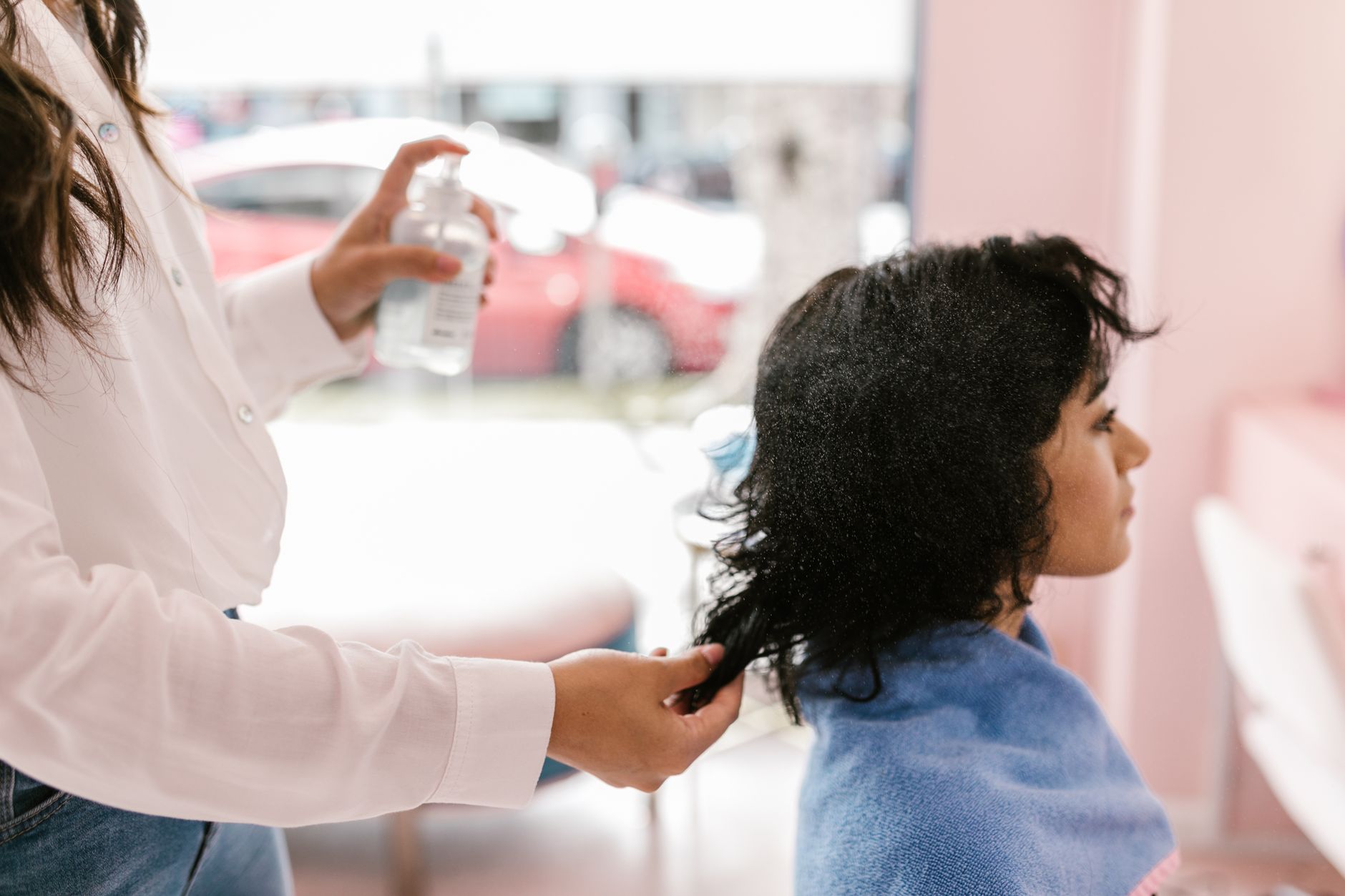
A lightweight leave-in conditioner or a little hair serum is usually enough.
If your lengths feel dry and fluffy, try a lightweight leave-in conditioner. You'll get a softer feel without the heaviness of a rich styling cream. A spray or fluid formula is a better bet than a thick butter or mask.
For those short flyaways that won't lie flat, a light silicone-based hair serum is worth trying. Start with half a pea-sized amount for medium-length hair. Rub it between your palms until it spreads evenly, then smooth it over your hair.
Hair oils aren't necessarily a problem, but it's easy to use too much. Fine hair and oily roots usually do better with a lightweight formula kept to the ends rather than a heavy oil.

What should you keep nearby?
- Lightweight leave-in spray.
- A clear, fluid hair serum (particularly handy when the ends feel rough halfway through the day).
- Do you have a wide-tooth comb for the occasional tangle?
- Clean, soft microfiber cloth.
How do you apply it without grease?
Start with less product than you think you need, and work upward from the ends.
Put a little product on your palms and rub them together until you can't see a blob sitting on your skin. Gently skim your hands over the outside of your hair, starting at the ends. Move upward only if the frizz continues.
Fine hair often needs just one light pass. Thicker or curlier hair may need a little more attention, so work through small sections instead of coating everything. Don't rub your hair between your palms. That extra friction can leave it even fuzzier.
Keep product a couple of inches away from your scalp. If the crown is sticking up, try smoothing it with whatever's left on your hands before reaching for another dose.
What order works best?
- Half a pea-sized amount, rubbed between your palms.
- Start with the ends.
- Are the surface flyaways still sticking up? Gently pat them down with the product left on your hands.
- Give it a minute before adding more.
What if the frizz keeps coming back?
Go back to the stubborn sections rather than adding another layer all over your head.
Humid air can make dry hair puff up again as it absorbs moisture. A tiny dab of smoothing serum may keep the surface neater, but topping it up every few minutes is a quick way to end up with flat, coated hair.
Static is a different annoyance. You'll often notice fine strands floating away from the rest of your hair after pulling off a sweater or brushing dry lengths. Slightly damp fingertips and a gentle touch can settle them without another layer of product.
Try not to keep brushing dry, textured hair when you're fighting frizz. A few careful adjustments with your fingers are often enough. Got knots? Work them loose gently instead of dragging a brush through the entire length.
What helps when frizz returns?
- Damp fingertips for static.
- Small tangles? Work through them with a clean comb rather than brushing everything again.
- Smooth just the affected section.
- Stop before your hair feels coated.
How can you prevent tomorrow's frizz?
Be gentler with your hair, especially while it's wet and when you're getting ready for bed.
Some of that daytime frizz starts much earlier. Rough towel drying, aggressive brushing and too much heat can leave the hair surface looking rough. The American Academy of Dermatology recommends gentler hair-care habits, including careful detangling and limiting damaging styling practices.
After washing, squeeze out excess water with a soft towel or cotton T-shirt. Don't rub. Work through tangles with a wide-tooth comb, starting near the ends. If you're blow-drying, keep the heat lower and don't hold the dryer close to one section for too long.
Your pillowcase can make a difference overnight. A smooth one may reduce friction for some hair types. If your hair is long, loosely secure it before bed, but don't pull tightly at the roots.
Which small habits help?
- Blot wet hair gently.
- Start detangling at the ends and work upward (it's much easier than forcing a comb through wet knots).
- Could you turn the blow-dryer heat down a notch?
- Skip tight hairstyles overnight.
People also ask
Hair FAQ
Can you tame frizzy hair with water alone?
Yes, for mild frizz and static. Slightly damp hands can settle loose strands without soaking your hair. If the lengths still feel rough afterward, try a little lightweight leave-in product.
Should you brush dry frizzy hair?
Not over and over. Brushing can create more friction, especially on textured or curly hair. Try loosening a small tangle with your fingers or a wide-tooth comb instead.
Why does serum make my hair look greasy?
Usually, there's too much serum or it's too close to your roots. Try half a pea-sized amount, spread it across both palms, then skim it over the lengths and ends.