Quick answer
Start with 1 to 3 drops of hair oil, and keep it off your roots. Rub it between your palms first, then smooth it over the middle and ends of your hair. Damp hair gives you a lighter finish, while dry hair lets you target the rough bits. Your hair type matters here.
How much oil do you need?
Start with 1 to 3 drops, depending on how long and thick your hair is. You can always add another drop. Getting too much out usually means washing your hair again.
This is an easy mistake to make. A full dropper looks like hardly anything in your palm, but it can leave fine hair flat and stringy. Try one drop if your hair is short or fine, and two if it's medium-length.
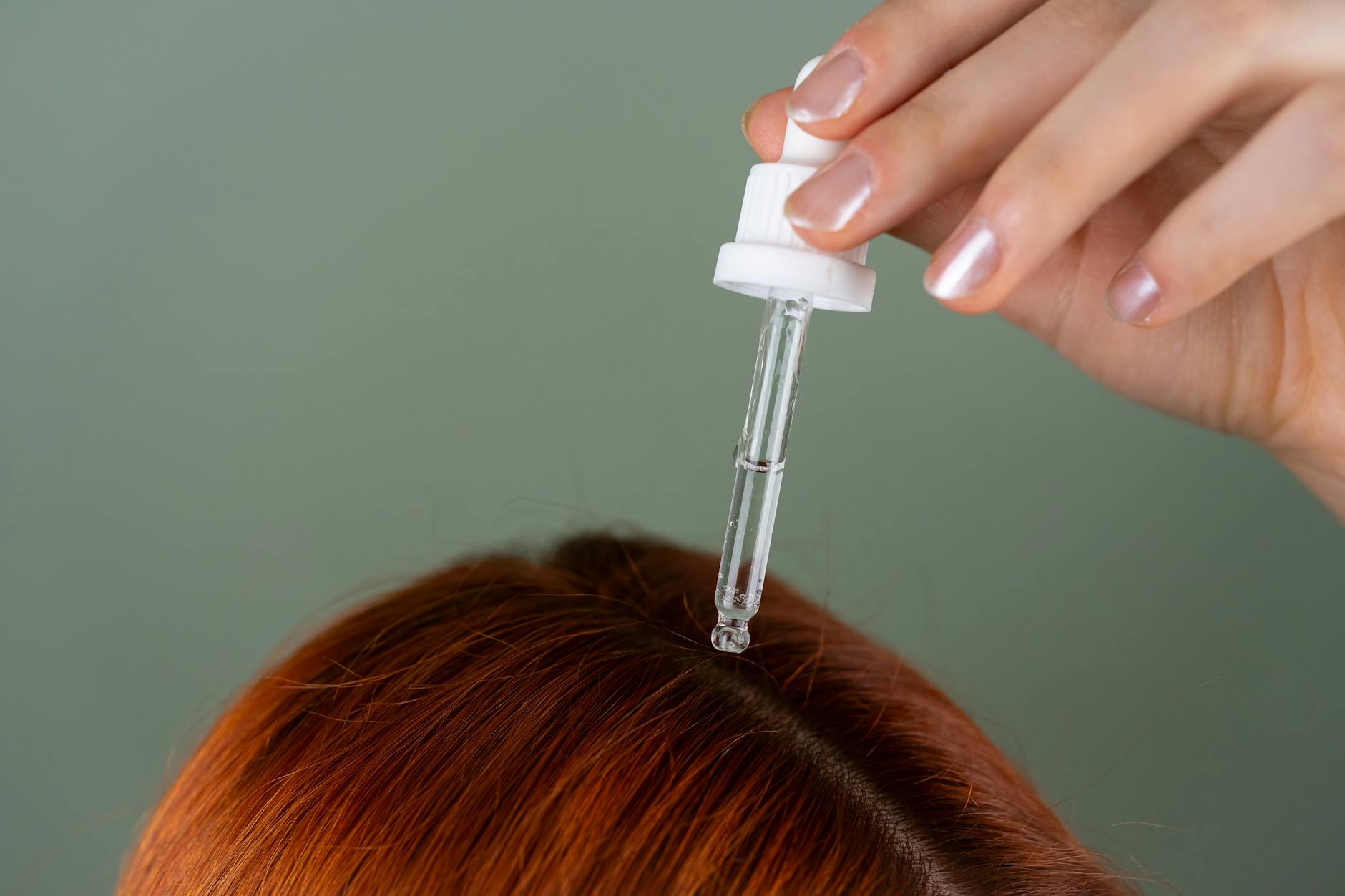
Rub the oil between both palms until you have a thin, even layer. Got long, thick or very dry hair? Add one more drop after you've worked through the first section. Don't pour it straight onto your head.

How many drops?
- One drop is enough.
- For medium-length hair, two drops usually spread well without leaving that greasy finish (you can add more later if the ends still feel rough).
- Is your hair thick and dry? Try a third drop.
- Give it a minute before adding more.
Where should the oil go?
Keep most hair oil on your mid-lengths and ends, rather than your scalp. Those lower sections often feel drier, while oil near the roots can make freshly washed hair look greasy surprisingly fast.
Start with the last few inches. That's usually where rough ends, flyaways and little tangles show up first. Smooth your oiled palms over those areas, then move any leftover product up through the middle.
Keep roughly 2 to 3 inches away from your scalp if your roots get oily quickly. For long hair, split it into two sections and spread the oil with your fingertips. Don't keep rubbing the same spot, or one section will look shiny while the rest stays dry.

Where to focus
- Start at the ends.
- Work upward through dry mid-lengths, especially where your hair catches or tangles after washing.
- Roots getting greasy? Leave them alone.
- Can you still see flyaways? Smooth them with whatever's left on your palms.
Wet or dry hair first?
Damp hair gives you a lighter, more even finish. Dry hair is better when you only want to smooth a few rough ends. The right moment depends on the finish you like and how much oil your hair absorbs.
After washing, blot your hair with a towel first. It should feel slightly wet, not drip onto your shoulders. Rub 1 to 2 drops between your palms and smooth them over the mid-lengths and ends before styling. It's a good time to deal with rough ends before they dry.
Dry hair is easier to target because you can see exactly which sections look frizzy or feel rough. Start with one drop, especially if your hair is fine. Don't keep adding little amounts throughout the day. They can build up faster than you think.
When to apply it
- After washing, towel-blot first.
- Before styling, smooth oil over damp ends while your hair is still slightly wet.
- Dry hair? Focus on the rough patches.
- Before bed, keep the oil light so it doesn't soak into your pillow.
Which oil texture works best?
Fine hair usually prefers a lightweight oil or serum. Thick, coarse or curly hair can handle something richer. Pay attention to how your hair feels afterward, not just what the bottle promises.
If your hair is fine or straight, go for a lightweight oil that spreads easily. Heavy formulas can flatten your roots and make freshly washed hair look ready for another shampoo. Start with one drop and check the finish in natural daylight.
Thick, curly or coarse hair can be easier to manage with a richer oil through the dry lengths. You may need a little more, but piling on product won't give you better results. If your hair feels coated or separates into oily strands, cut back next time.
Pay attention the morning after, too. An oil might look fine for the first ten minutes but leave your ends feeling heavy once it settles. Notice itching, redness or irritation that won't go away? Stop using it. A dermatologist can help if the reaction continues, especially if you already have a scalp condition or suspect an allergy.
Before you buy
- Fine hair needs a lighter feel.
- For curly hair, an oil that spreads easily makes coating each section much less of a chore.
- Coarse ends still feel rough? Try something richer.
- Sensitive scalp? Have you checked the ingredient list?
How much hair oil should you start with?
| Hair type | Starting amount | Where to apply |
|---|---|---|
| Fine or straight hair | 1 drop | Last few inches of the ends |
| Medium or wavy hair | 2 drops | Mid-lengths and ends |
| Thick or curly hair | 2 to 3 drops | Mid-lengths, ends and dry sections |
| Very dry or coarse hair | 3 drops, then reassess | Dry ends and areas needing extra smoothing |
People also ask
Hair FAQ
Can you put hair oil on your roots?
Yes, but you don't need it there for everyday smoothing. If your roots get oily quickly, keep your styling oil on the mid-lengths and ends instead.
Can you use hair oil every day?
Yes, if your hair tolerates it and you keep the amount small. Fine hair may only need oil after washing, while thick or dry hair might need an occasional touch-up between washes.
Should you wash hair oil out?
Not always. Lightweight styling oils are made to stay in your hair. Pre-wash treatments are different, so shampoo them out according to the product directions.