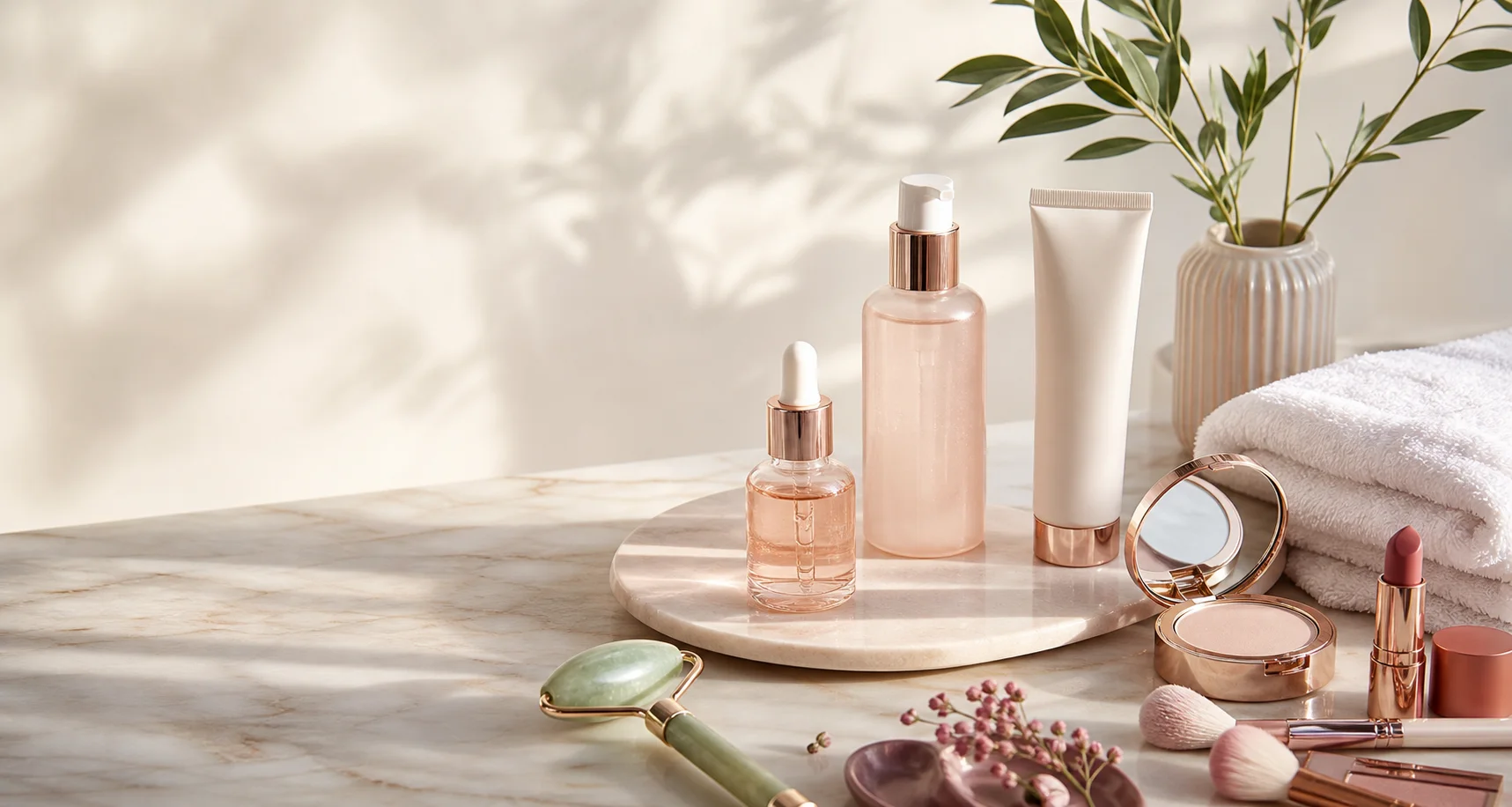
Where should you store skincare products?
A cool bedroom drawer or cupboard is usually your best bet. Keep your products away from sunlight and steam, especially if your bathroom gets hot after a long shower.
That bathroom shelf might be convenient, but it's not always a great home for your skincare. Every hot shower fills the room with steam. Those repeated changes in temperature and humidity can affect some formulas, while moisture around open containers makes contamination easier.
A bedroom drawer, dressing table cupboard or linen closet is a better choice. Keep bottles away from radiators, sunny windows and kitchen heat. Stand them upright, too. A windowsill might look like a lovely display spot, but afternoon sunlight can warm the packaging.

Where should you put everything?
- A cool bedroom drawer.
- A dry bathroom cabinet works when you don't have another spot (just keep it away from the shower).
- Sunny windows? That's a bad spot for bottles.
- If there's a radiator nearby, move your skincare to another shelf.
Does temperature affect skincare?
Yes, too much heat and sudden temperature changes can affect skincare formulas. A stable room temperature is your safest bet unless the manufacturer gives different storage instructions.
Summer makes this harder. A serum left in a hot car, beside a sunny window or inside a warm travel bag can get much hotter than you realise. That heat can change its preservatives, texture, color or smell.
You don't need to squeeze your entire collection into the refrigerator. Most everyday cleansers, moisturizers and serums are perfectly happy in a cool cupboard. Only refrigerate something when its packaging recommends it or the manufacturer confirms it's suitable. Colder isn't automatically better.
When the weather gets hot, move bottles away from windows and bring them indoors rather than leaving them in a parked car. Traveling? A small insulated pouch can limit temperature changes, but don't leave it somewhere hot for hours.

What changes in hot weather?
- Out of direct sunlight.
- A hot car can heat a skincare bottle far beyond the temperature you'd normally keep it at (even on a short errand).
- Does the manufacturer recommend refrigeration? Follow those instructions.
- If a product keeps heating up and cooling down, move it somewhere more stable.
How should you handle skincare packaging?
Keep containers clean, close them properly and don't leave them exposed to air. Your fingers can introduce dirt and microorganisms, so the less contact with the formula, the better.
The container matters more than you might think. A pump bottle lets you dispense moisturizer or serum without dipping your fingers inside. An airless pump also limits repeated contact with outside air. Jars need more attention because you expose the contents every time you open one.
Before reaching into a moisturizer jar, wash and dry your hands. A clean cosmetic spatula works too. Just don't leave it sitting inside the jar between uses. If cream builds up around the rim, wipe it away and tighten the lid.
Serums with droppers need the same care. Don't touch the dropper directly to your face, and don't leave the bottle open while you're getting ready. Dispense what you need, then put the cap back on straight away.
What small habits make a difference?
- Clean, dry hands first.
- A clean cosmetic spatula is handy for jar moisturizers, particularly when you're using the same product every morning.
- Caps left loose overnight? Tighten them after every use.
- If cream collects around the rim, wipe it away before closing the bottle.
How do you know when skincare expires?
Check the expiration date and the little open-jar symbol on the packaging. One tells you when a product should be used by; the other tells you how long it's intended to remain suitable after opening.
Look for a small picture of an open cosmetic jar with a number followed by the letter M. That's the period-after-opening symbol, usually called PAO. A 6M label means the product is intended to be used within six months of opening. With 12M, you've got twelve months.
Write the opening date on a small piece of removable tape and stick it underneath the bottle or on its outer box. Six months from now, you won't have to guess. Keep the original packaging if it contains storage instructions or an expiration date that isn't printed on the container.
The rules aren't identical everywhere. Under European cosmetics regulations, products with a minimum durability exceeding 30 months generally carry a PAO indication when relevant. In the United States, federal law doesn't generally require expiration dates on cosmetics, although manufacturers remain responsible for product safety. Sunscreens and certain other skincare products follow different rules and can have printed expiration dates.
What should you look for?
- The open-jar symbol.
- Read the number beside the M so you know how many months you've got after opening.
- When did you first open it?
- If there's a printed expiration date, follow it.
Which skincare products need extra care?
Give vitamin C serums, retinoid products, sunscreen and jar-packed formulas a closer look. Their ingredients and packaging can make them more sensitive to heat, light, air or contamination.
Vitamin C serums can be sensitive to air and light, depending on the formulation. An opaque or tinted bottle is a good option when available. Keep the cap tight and follow the storage directions on the bottle. If the color, smell or texture changes noticeably, check the manufacturer's guidance rather than assuming the serum is still fine.
Retinol and other retinoid products also need protection from heat and light. Leave them in their original packaging instead of transferring them into clear decorative containers. Some formulas are more sensitive than others, so follow the instructions for your particular product.
Sunscreen needs extra attention in summer. Keep it out of direct sunlight, and never leave the tube in a hot beach bag or car. Check the expiration date before heading outside. Expired sunscreen might not provide the protection stated on its label, even when it still looks perfectly normal.
Don't forget your eye products. Mascara has a relatively short recommended usage period. The FDA notes that manufacturers usually recommend throwing it away two to four months after purchase. Never add water or saliva to dried-out mascara. Also throw away eye products you've used during an eye infection.
Which products deserve a closer look?
- Vitamin C in clear bottles.
- Retinol left near a sunny window can be exposed to more heat and light than its packaging recommends.
- Sunscreen past its printed expiration?
- If your mascara is dry or clumpy, it's time to throw it away.
People also ask
Skincare FAQ
Can you keep skincare products in the bathroom?
Yes, but a dry cabinet away from the shower is a better choice. If the mirror gets covered in steam after every shower, a bedroom drawer is probably a safer spot.
Should you refrigerate skincare products?
Usually, no. Most products are fine at room temperature in a cool, dry place. Only put something in the fridge when its manufacturer recommends it.
Can you use skincare after the PAO date?
It's best to replace it once the PAO period has passed. A change in smell, color or texture is another warning sign, but looking normal doesn't guarantee an old product is still suitable.