Quick answer
To protect your hair from heat while straightening, make sure it is completely dry, apply a heat protectant according to its instructions, and choose the lowest flat iron temperature that works for your hair. Straighten small sections slowly, avoid repeated passes, and adjust your technique for your hair texture, thickness, and condition.
How should you prepare your hair before straightening?
Start with clean or appropriately prepared hair that is completely dry, detangled, and protected with a suitable heat protectant. Good preparation helps the flat iron move smoothly through each section and reduces the temptation to repeat passes.
The first rule is simple: never clamp a standard flat iron onto damp hair. Water left in the hair can heat rapidly during styling and increase the risk of damage. If you wash your hair first, dry it thoroughly with a suitable blow-dryer setting and follow the flat iron manufacturer's instructions. Let the hair cool before ironing if it feels warm from blow-drying, and separate it into sections so you can check for lingering dampness.
Apply a heat protectant designed for your styling method, following the product label for application amount and whether the formula belongs on damp or dry hair. Distribute it evenly rather than concentrating it on the surface. A heat protectant can help reduce styling stress, but it does not make hair immune to heat damage. Detangle gently with a suitable comb or brush, remove knots before ironing, and avoid adding excessive product that leaves the hair sticky or coated.

Your pre-straightening checklist
- Confirm that every section is completely dry.
- Detangle gently from the ends upward.
- Apply heat protectant as directed on the label.
- Separate the hair into manageable sections.
- Check that the flat iron plates are clean and the tool is working properly.
What flat iron temperature should you use to reduce heat damage?
Use the lowest temperature that gives you the result you want, rather than automatically choosing the highest setting. Fine, fragile, bleached, or chemically treated hair generally calls for extra caution, while thicker hair may need a different approach.
There is no single temperature that suits every head of hair. Hair thickness, texture, previous chemical treatments, moisture condition, and the performance of the flat iron all affect how much heat is needed. Start with a low setting permitted by your tool's instructions, test one small section, and increase the temperature only if necessary. Do not assume that a high setting is more effective or that one commonly recommended number is safe for everyone.
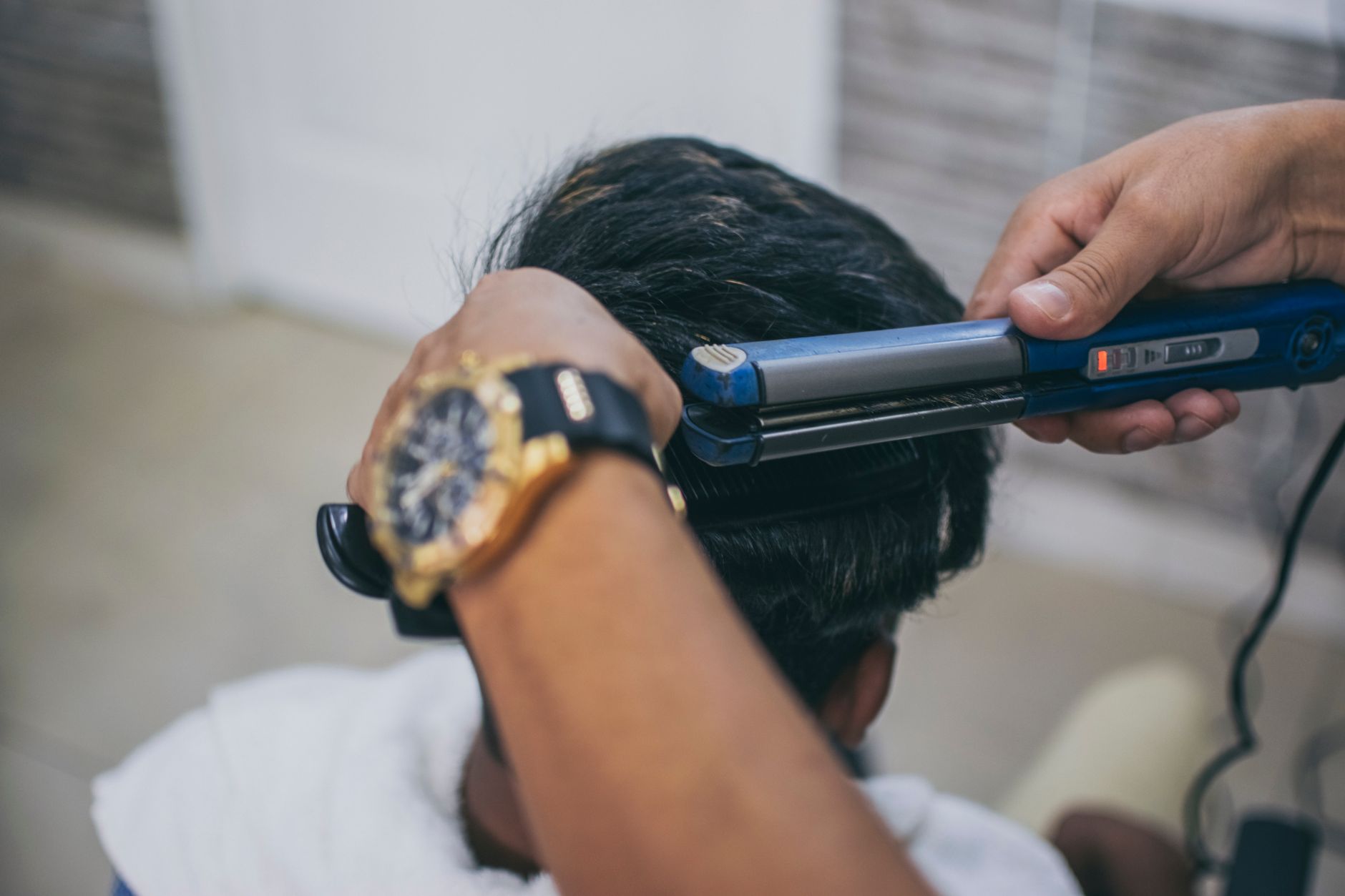
When you begin ironing, take small, even sections and keep the plates moving smoothly from near the roots, without touching the scalp, toward the ends. Avoid stopping with the iron clamped in one place. One controlled pass may be sufficient when the hair is well prepared, but do not keep repeating passes over the same section to chase a perfectly straight finish. If a section needs repeated ironing, reassess its dryness, size, detangling, and temperature rather than immediately turning the heat
Habits that limit unnecessary heat
- Start low and adjust gradually.
- Use consistent sections that the plates can smooth evenly.
- Keep the iron moving instead of holding it in place.
- Avoid repeated passes over the same strands.
- Allow hair to cool before deciding whether any small touch-up is needed.
How should you change your technique for different hair textures and conditions?
Choose your technique based on how your hair responds, not just whether it is straight, wavy, curly, or coily. Hair that is fine, brittle, bleached, or chemically treated may need less heat and less frequent straightening than hair in good condition.
Fine hair often responds to lower temperatures and may become limp or damaged when exposed to excessive heat. Thick or coarse hair can take longer to smooth, but using smaller sections and preparing the hair carefully is preferable to repeatedly passing a hot iron over large sections. Curly and tightly coiled hair also benefits from thorough detangling, consistent sectioning, and a realistic goal for the finish. Do not assume that texture alone determines the right temperature; individual hair c
If your hair has been bleached, relaxed, permanently straightened, or otherwise chemically treated, be especially conservative because it may already be more vulnerable to breakage. Reduce how often you use the flat iron, consider heat-free styles between straightening sessions, and stop if you notice unusual roughness, snapping, or a persistent burnt smell. Use a lower-heat styling option when practical. If you develop persistent scalp irritation, an allergic reaction to a styling product, or a
Signs to change your routine
- Hair feels increasingly brittle, rough, or difficult to detangle.
- You notice more snapping or breakage during styling.
- You need repeated passes to achieve the same result.
- Your scalp develops persistent redness, itching, or irritation.
Practical flat iron adjustments for different hair types and conditions.
| Hair type or condition | What to prioritize | Straightening approach |
|---|---|---|
| Fine or fragile hair | Minimize heat exposure | Start at a low temperature and test a small section before styling the rest. |
| Thick or coarse hair | Work in manageable sections | Begin with a conservative setting and increase only if needed rather than relying on repeated passes. |
| Curly or tightly coiled hair | Prepare carefully and keep sections consistent | Use fully dry, detangled hair and a temperature that smooths the section without repeated ironing. |
| Bleached, chemically treated, or damaged hair | Reduce additional stress | Use the lowest effective heat, limit how often you straighten, and consider skipping the flat iron if the hair feels fragile. |
| Hair that is still damp | Dry completely before using a standard flat iron | Use a suitable blow-drying method first and check that no moisture remains in the sections. |
People also ask
Hair FAQ
Should you straighten your hair when it is slightly damp?
No. Make sure your hair is completely dry before using a standard flat iron. Damp strands can be more vulnerable to heat-related damage, so dry each section thoroughly before styling.
Does heat protectant prevent all flat iron damage?
No. Heat protectant can help reduce heat-related stress when used as directed, but it cannot eliminate damage. A suitable temperature, completely dry hair, fewer passes, and less frequent straightening remain important.
How many times should you pass a flat iron over each section?
Aim for as few passes as practical, ideally one controlled pass when your preparation and technique allow it. There is no universally safe number for every hair type. If you repeatedly need more passes, reassess the section size, dryness, and temperature instead of increasing heat automatically.