Quick answer
To apply blusher over 60 for a soft, natural finish, start with a small amount and place it where your cheeks naturally flush, then blend the edges until there are no obvious lines. Choose a comfortable texture for your skin, build color gradually, and adjust placement to your own face rather than following strict age-based rules.
Where should you place blusher over 60?
There is no single correct blush placement for everyone over 60. Start where your cheeks naturally develop color, then blend slightly outward and upward while checking the result on your individual face shape.
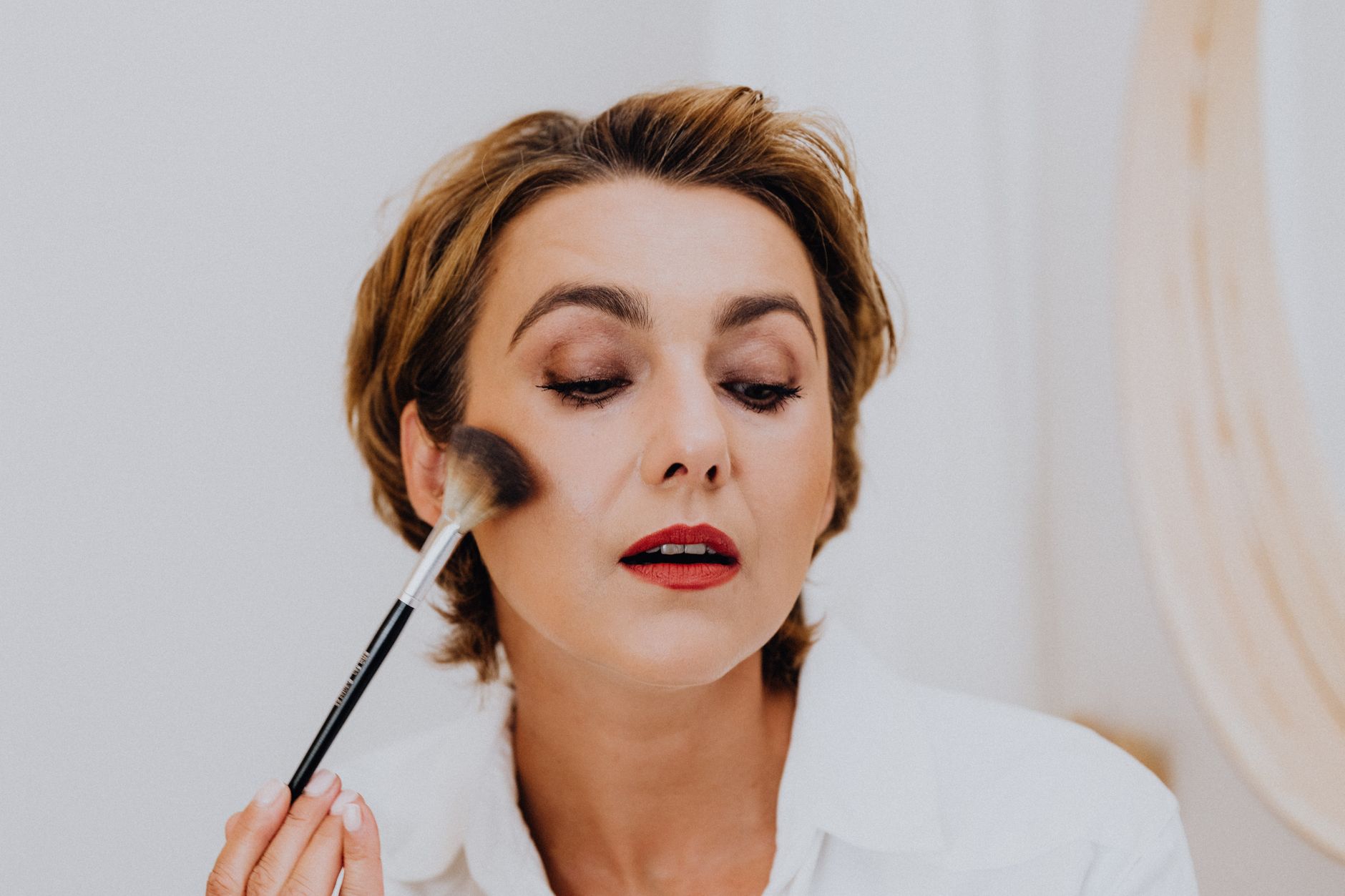
Instead of following a rule that says blush must always sit high on the cheekbones, look at your face straight on in good natural light. Place a small amount around the fuller area of the cheek, keeping some distance from the sides of the nose, and diffuse the color toward the outer cheek. The goal is a gradual wash rather than a clearly defined patch.
Placement can also change according to your features and the effect you prefer. Blending slightly upward can create a more lifted visual direction, while keeping some color on the apples of the cheeks can give a softer flushed effect. Try both approaches and judge the result with your face relaxed rather than relying on an age-specific diagram.
Simple placement method
- Smile gently or look at your natural cheek shape to identify the fuller area.
- Apply a very small amount of blusher rather than loading the brush or fingers heavily.
- Blend outward and slightly upward toward the outer cheek.
- Step back from the mirror and check both cheeks in natural light.
- Soften any obvious edges before adding more color.
Which blusher texture gives a soft, natural finish?
Cream, liquid, and powder blusher can all look natural, so choose the texture that works comfortably with your skin and the makeup underneath it. The most useful test is whether the formula blends smoothly without emphasizing areas you would rather soften.
Cream and liquid formulas can create a seamless finish when tapped on in thin layers, especially over a light base. Fingers, a sponge, or a suitable brush can work depending on the formula. Avoid dragging repeatedly over the skin, which can disturb foundation or concealer underneath.
Powder blusher remains a good option if you prefer it. Look for a finely milled formula and use a soft brush with a light hand. If powder appears patchy, check whether your skincare or base makeup is still tacky before assuming that powder itself is the problem. Persistent irritation, allergic reactions, or other ongoing skin concerns are better discussed with a dermatologist or another qualified professional.

Choose by finish, not age
- Try cream or liquid for a softly blended, skin-like effect.
- Use finely milled powder when you prefer more controlled application.
- Match the blusher formula to the base products underneath it.
- Apply less product initially regardless of which texture you choose.
How do you keep blusher from looking too strong?
Build the color in thin layers and soften the edges after every application. It is easier to add another light layer than to blend away a large amount of highly pigmented blusher.
Pick up less product than you think you need, remove obvious excess from a brush when appropriate, and apply the first layer lightly. Muted rose, peach, berry, coral, and neutral pink tones can all work, but the best choice depends more on your complexion, undertone, and personal preference than your age.
After applying, inspect the transition between the blush and the rest of your complexion. If you can clearly see where the color starts and stops, blend around the perimeter with a clean brush, sponge, or fingertips depending on the formula. Check the result in daylight when possible because strong bathroom lighting can make subtle color difficult to judge.
For softer color
- Start with one thin layer.
- Concentrate color where you want the flush to be strongest.
- Blend the perimeter without spreading color across the entire cheek.
- Check both sides from a normal viewing distance.
- Add a second light layer only if the first looks too faint.
A simple guide to adjusting blusher for a soft, natural-looking finish
| What to adjust | Try this | Watch for |
|---|---|---|
| Placement | Begin around the fuller part of the cheek and blend slightly outward and upward | Color sitting too close to the nose or forming a sharp stripe |
| Texture | Choose cream, liquid, or finely milled powder according to your skin and base makeup | A formula that catches noticeably on dry or textured areas |
| Color intensity | Apply a thin first layer and add more only where needed | Starting with so much pigment that blending becomes difficult |
| Blending | Soften the perimeter with a clean brush, sponge, or fingertips as appropriate | Visible edges between blusher and surrounding makeup |
People also ask
Makeup FAQ
Is cream or powder blusher better over 60?
Neither is automatically better because of age. Cream can give a soft, seamless effect, while a finely milled powder can provide easy control. Choose according to your skin, base makeup, preferred finish, and how comfortably the formula blends.
Should blusher go on the apples of the cheeks or higher up?
Either placement can work. Color around the fuller part of the cheek can create a gentle flushed effect, while blending outward and slightly upward changes the visual direction. Experiment with placement on your own face instead of treating one technique as a universal rule.
How can I make blusher look more natural?
Use less product at first, build the color gradually, and spend time softening the edges. Check the finished makeup from a little distance and in natural light so you can see whether the blush blends smoothly into the rest of your complexion.