Quick answer
The best way to exfoliate legs involves a combination of physical and chemical methods, tailored to your skin's needs and sensitivity. Regular, gentle exfoliation using a scrub or brush, alongside chemical exfoliants like AHAs or BHAs, helps remove dead skin cells and prevent ingrown hairs, leading to smoother skin texture.
Why Exfoliate Your Legs and How Often?
Exfoliating your legs regularly helps remove dead skin cells, promoting smoother skin texture and reducing the likelihood of ingrown hairs. The ideal frequency depends on your skin type and chosen method, but typically ranges from 1-3 times per week.
Exfoliation is the process of removing dead skin cells from the outer layer of your skin. On your legs, this practice can significantly improve skin texture, making it feel softer and appear more radiant. It also helps clear pores, which is crucial for preventing those bothersome ingrown hairs that often appear after shaving or waxing.
Beyond smoothness and ingrown hair prevention, regular exfoliation can also improve the effectiveness of other skincare products, like moisturizers, by allowing them to penetrate deeper. For most skin types, exfoliating 1-3 times a week is a good starting point. Those with sensitive skin may opt for once a week, while others might tolerate more frequent exfoliation. Pay attention to how your skin responds and adjust your routine accordingly.
General Exfoliation Frequency Guide
- Normal Skin: 2-3 times per week
- Dry Skin: 1-2 times per week
- Sensitive Skin: 1 time per week, using gentle methods
- Oily Skin: 2-3 times per week
Choosing the Right Exfoliation Method for Your Legs
You can choose between physical exfoliation, which involves manual scrubbing, or chemical exfoliation, which uses acids to dissolve dead skin cells. Both methods offer distinct benefits and can be effective for achieving smooth, ingrown-hair-free legs when used appropriately.
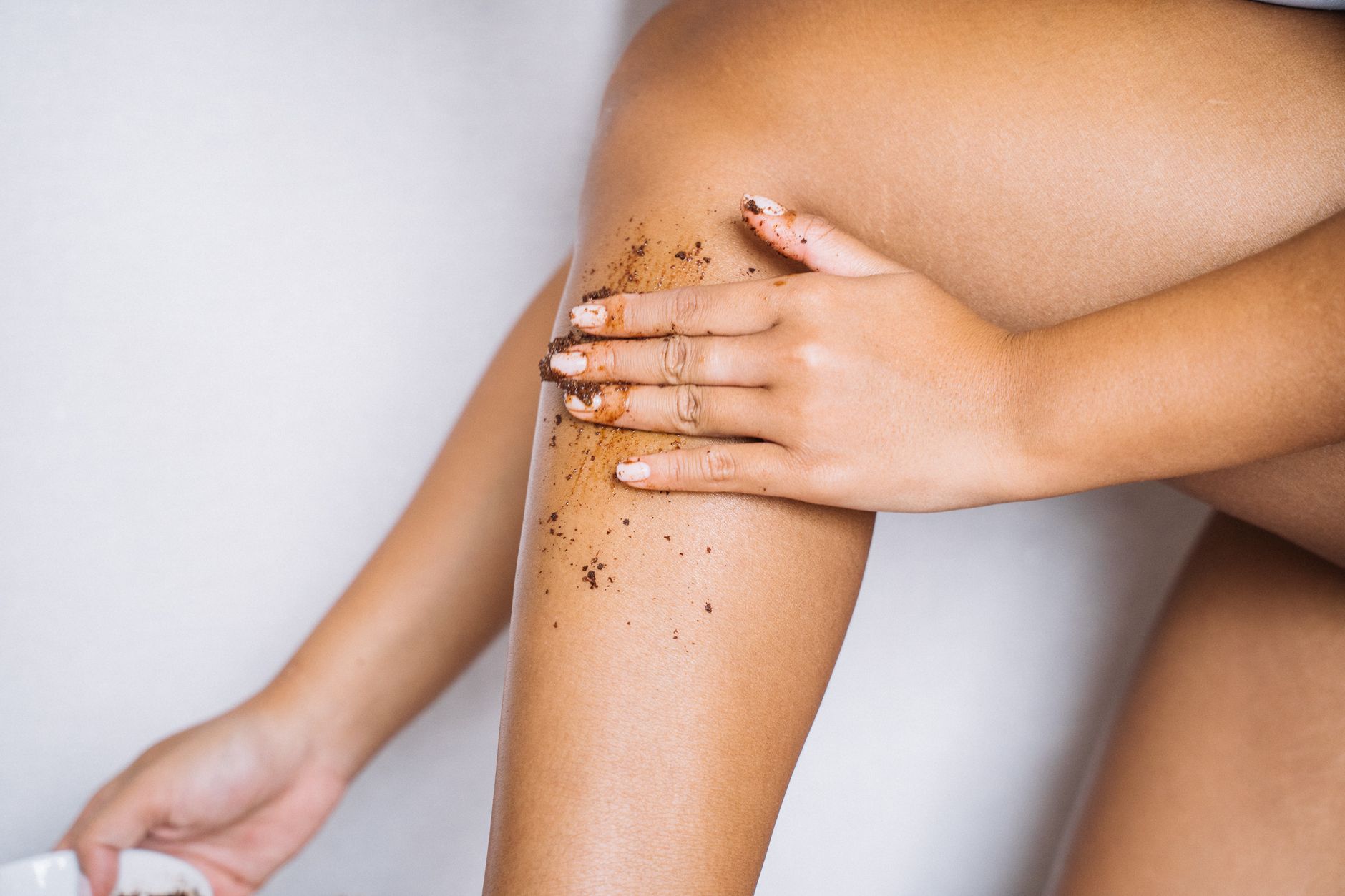
Physical exfoliation involves using a tool or product with abrasive particles to manually slough off dead skin. Sugar or salt scrubs are popular choices for their effectiveness and often contain moisturizing oils. Apply to damp skin in circular motions. Exfoliating mitts or loofahs can be used with your regular body wash to gently scrub your legs. Remember to replace loofahs and mitts regularly to avoid bacterial buildup. Dry brushing, performed on dry skin before showering, uses a firm-bristled
Chemical exfoliation uses acids to loosen and dissolve the bonds between dead skin cells, allowing them to shed easily. Alpha Hydroxy Acids (AHAs) like glycolic acid and lactic acid are common AHAs found in lotions or serums. They work on the skin's surface and are good for general smoothness. Beta Hydroxy Acids (BHAs), such as salicylic acid, can penetrate oil, making them particularly effective for addressing clogged pores and ingrown hairs. When choosing, consider your skin type. If you have

Tips for Applying Exfoliants
- Always apply physical exfoliants to damp skin.
- Use gentle, circular motions, avoiding excessive pressure.
- Follow product instructions carefully for chemical exfoliants.
- Patch test new chemical exfoliants on a small area first.
Achieving and Maintaining Smooth, Ingrown-Free Legs
To achieve smooth, ingrown-free legs, integrate regular, gentle exfoliation with proper shaving techniques and consistent moisturizing. Consistent care helps maintain skin health and prevents common issues like dryness and irritation.
Exfoliating your legs before shaving is an excellent way to lift hairs and remove dead skin cells, allowing for a closer, smoother shave and reducing the risk of ingrown hairs. Do this a few hours before or the day before you plan to shave. When shaving, always use a sharp, clean razor and shave with the grain of the hair whenever possible, especially if you are prone to ingrowns. Use a moisturizing shave cream or gel to reduce friction.
Immediately after exfoliating or shaving, apply a rich, hydrating moisturizer to lock in moisture and soothe the skin. Look for ingredients like hyaluronic acid, ceramides, or shea butter. This step is crucial for preventing dryness and maintaining skin barrier health. If ingrown hairs appear, avoid picking at them. Instead, continue gentle exfoliation and consider products containing salicylic acid. If irritation persists, or you experience significant redness, swelling, or pain, consult a qual
Your Smooth Leg Routine
- Exfoliate 1-3 times a week, adjusting for skin sensitivity.
- Shave after exfoliation, using a sharp razor and shave cream.
- Moisturize immediately after showering and shaving.
- Wear loose clothing when possible to reduce friction.
Comparing Leg Exfoliation Methods
| Method | Type | Benefits | Considerations |
|---|---|---|---|
| Physical Scrub | Manual | Instantly smooths skin | Requires gentle application to avoid irritation |
| Dry Brushing | Manual | Boosts circulation, gentle exfoliation | Can be too harsh for very sensitive skin |
| Exfoliating Mitt or Loofah | Manual | Good for daily light exfoliation | Replace regularly to prevent bacterial buildup |
| Chemical Exfoliant (AHA/BHA) | Chemical | Deep exfoliation, helps with ingrowns | Gradual results, may increase sun sensitivity |
People also ask
Skincare FAQ
Can I exfoliate my legs every day?
Daily exfoliation is generally not recommended as it can lead to irritation, dryness, and compromise your skin's protective barrier. Most skin types benefit from exfoliating 1-3 times per week, allowing skin to recover between sessions.
What should I do if I get ingrown hairs frequently?
If you frequently get ingrown hairs, ensure you are exfoliating regularly and gently before shaving. Use a sharp razor, shave with the hair growth, and moisturize well. Products with salicylic acid can also help. If the problem persists or worsens, consider consulting a dermatologist.
Is dry brushing effective for leg exfoliation?
Dry brushing can be an effective physical exfoliation method for legs, promoting smoother skin and stimulating circulation. Always brush gently towards your heart on dry skin before showering, and follow up with a moisturizer.