
Quick answer
To control oily skin throughout the day, keep your routine simple: cleanse gently, use a lightweight moisturizer, choose oil-free or noncomedogenic products, and avoid repeatedly washing your face. If shine appears later, press blotting paper onto oily areas before adding more makeup or powder.
What Should Your Morning Routine Look Like for Oily Skin?
Start with a gentle cleanse, lightweight moisturizer, and sunscreen rather than trying to dry out your skin. A short routine is easier to repeat and helps you avoid unnecessary layers.
It can be tempting to start the morning with a strong cleanser when your face already feels oily, but harsher is not necessarily better. The American Academy of Dermatology recommends a mild, gentle face wash and advises against scrubbing, which can irritate the skin. Cleansing up to twice daily and after sweating is generally enough for everyday care.
Follow cleansing with moisturizer even if your skin becomes shiny easily. Look for lightweight products labeled oil-free or noncomedogenic if those formulas suit you. During the day, sunscreen should also be part of the routine. Combining steps, such as choosing a moisturizer with suitable sun protection, can help keep the routine manageable.

Keep the morning routine simple
- Wash with a mild cleanser without aggressive scrubbing.
- Apply a lightweight moisturizer.
- Use broad-spectrum sunscreen before daytime exposure.
- Let skincare settle before applying makeup.
How Can Makeup Help Control Shine Without Adding Too Many Products?
Use fewer, well-chosen makeup layers instead of stacking several mattifying products. Oil-free, water-based, or matte formulas can make shine easier to manage through the day.
If you wear makeup, start by deciding which products actually earn a place in your routine. The American Academy of Dermatology suggests oil-free and water-based makeup for oily skin and notes that matte products can help reduce the appearance of shine. That may mean choosing one suitable base product rather than combining primer, heavy foundation, several powders, and repeated setting layers.
Pay attention to how your own skin responds rather than treating every oily area the same way. You might need less foundation around the nose or forehead, for example, or only a small amount of powder where shine appears first. If a product causes persistent stinging, redness, itching, or other irritation, stop using it and consider asking a dermatologist or another qualified professional for guidance.
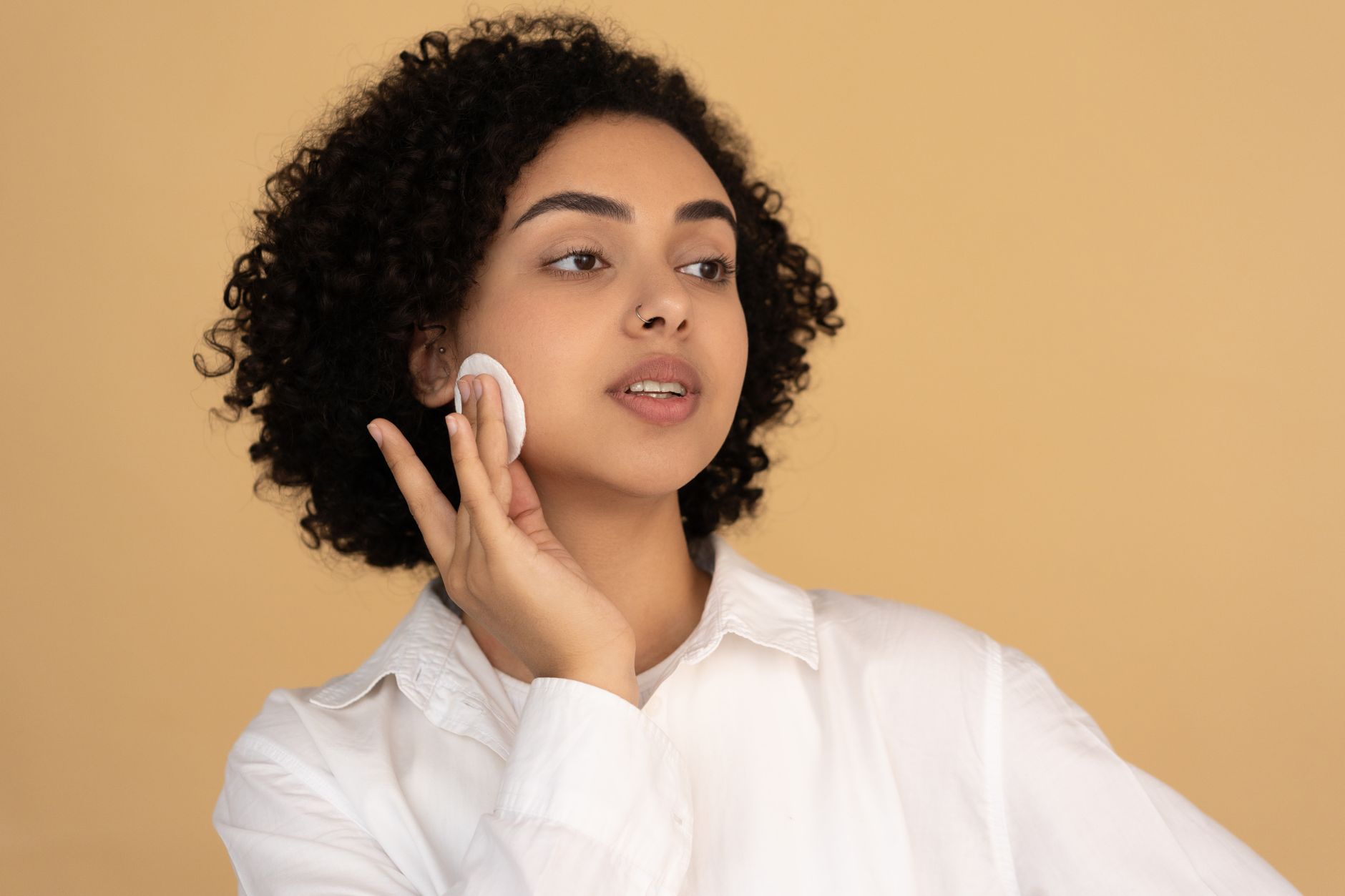
Makeup choices that keep the routine practical
- Look for oil-free, water-based, or noncomedogenic formulas when appropriate.
- Use matte finishes selectively on areas that become shiny.
- Apply thin layers instead of repeatedly adding product.
- Remove makeup fully before bed.
What Should You Do When Your Skin Gets Oily in the Middle of the Day?
Blot excess oil instead of restarting your entire skincare routine. Gentle touch-ups can reduce visible shine without adding several new products or repeatedly cleansing.
For a quick midday fix, blotting papers are one of the simplest options. Press the paper against shiny areas for a few seconds and lift it away rather than rubbing it across your face. The American Academy of Dermatology specifically recommends pressing rather than rubbing because rubbing can move oil across the skin.
After blotting, check whether you actually need more makeup. A small amount of powder on the areas that still look shiny may be enough if you wear it, but constant layering can make makeup feel heavy. Also try to avoid touching your face unnecessarily during the day. If excessive oiliness comes with ongoing acne, irritation, or another persistent skin concern, discuss it with a qualified dermatologist rather than continually adding stronger products.
A quick midday shine routine
- Press blotting paper onto the forehead, nose, chin, or other oily areas.
- Lift rather than rub the paper across the skin.
- Reassess your makeup before adding more product.
- Keep your hands away from your face when possible.
Simple ways to manage oily skin from morning to evening
| When | What to do | What to avoid |
|---|---|---|
| Morning | Cleanse gently and apply lightweight moisturizer and sunscreen | Harsh scrubbing or trying to strip away all oil |
| Before makeup | Choose oil-free or water-based products that suit your skin | Heavy layers added only to prevent possible shine |
| Midday | Press blotting paper gently onto shiny areas | Rubbing the skin or washing your face repeatedly |
| Evening | Remove makeup and cleanse before your regular nighttime routine | Sleeping in makeup or leaving buildup on the skin |
People also ask
Skincare FAQ
Should I wash my face every time it becomes oily?
Usually, repeatedly washing throughout the day is unnecessary and may irritate your skin. A gentle cleanse up to twice daily and after sweating is a simpler approach, with blotting papers available for temporary shine between washes.
Do I still need moisturizer if my skin is oily?
Yes. Oily skin can still benefit from moisturizer. Choose a lightweight formula that feels comfortable on your skin, and consider products labeled oil-free or noncomedogenic if you are prone to clogged pores.
Why does my face become shiny again a few hours after my routine?
Skin naturally produces oil throughout the day, so some shine can return even after a careful morning routine. Instead of trying to eliminate every trace of oil, use simple touch-ups and adjust products that feel unusually heavy or irritating.