Does perfume last longer on clothes?
Usually, yes. Fabric holds onto perfume longer than warm skin, where heat and evaporation make the scent fade faster.
Ever taken off a scarf and noticed it still smells like your perfume hours later? That's pretty common. The fragrance on your wrists may have faded by then, but fabric releases its scent more slowly than warm skin.
The material matters, too. Cotton and wool can hold fragrance well, while synthetic fabrics behave differently depending on their finish. The perfume formula and how much you spray also make a difference, so don't expect every outfit to hold the same scent.

What affects fabric fragrance?
- Start with a fabric test.
- How often you wash a garment matters (frequent washing can remove fragrance before you get much wear from it).
- Already wearing perfume? Don't keep adding more layers.
- If you've worn a garment, let it air out before wearing it again.
How does perfume behave on skin?
Skin gives perfume a different scent as it warms up and reacts with your body chemistry. Moisturized skin generally holds fragrance better than dry skin.
Your wrists, neck and the skin behind your ears are popular places for perfume. These pulse points give off warmth, so the fragrance develops and spreads through the air. Don't be surprised if the same perfume smells a little different on someone else.
Start with clean, moisturized skin. After a shower, smooth on some unscented body lotion, especially if your arms or neck feel tight and dry. A thin layer is plenty. Give it a moment to settle before spraying your perfume.
The concentration makes a difference as well. Parfum and eau de parfum generally last longer than lighter eau de toilette and cologne formulas. A stronger formula doesn't mean you need to spray more.
What should you do first?
- Pat dry after showering.
- Dry skin? Smooth on unscented body lotion before reaching for your perfume.
- Which two or three pulse points will you use?
- Let the fragrance dry on its own.
How should you spray perfume on clothes?
A light spray is enough, but test a hidden patch first. Some perfume formulas leave marks or damage delicate fabrics.
Don't experiment on your favorite silk blouse or pale cashmere sweater. Start with an everyday cotton garment instead. Spray a tiny amount on a hidden spot, such as an inside seam, and let it dry completely. Check for discoloration or a mark before spraying anywhere more visible.
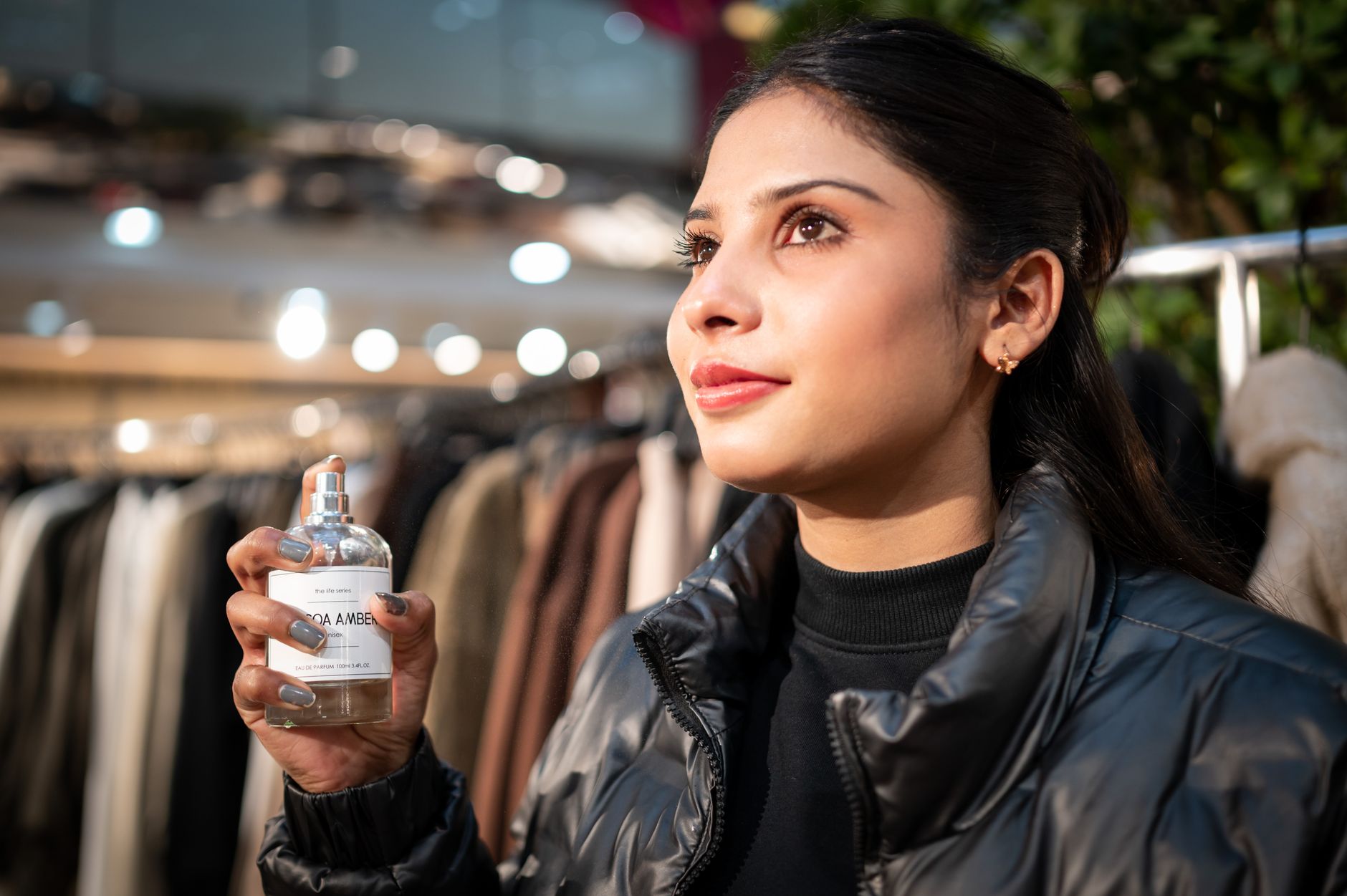
Hold the atomizer about 6 inches from suitable clothing and give it one light spray. Let the fabric dry before putting the garment on. There's no need to soak the collar or cuffs, especially where the material touches your skin.
Take extra care with silk, satin, suede, leather and other delicate materials. If you're unsure how a fabric will react, don't spray it directly. Put the perfume on your skin instead. You'll still enjoy the scent without risking an outfit you love.
What should you check first?
- Test inside a seam.
- Has the test spot dried completely? Check for marks before spraying elsewhere.
- Start with just one light mist.
- If the fabric is delicate, keep the perfume off it.
Can you use both methods?
Yes. Spray a little perfume on moisturized skin, then add one light mist to clothing if the fabric is suitable. You'll have fragrance on both without filling the room with it.
You don't need perfume from head to toe. Start with one or two sprays on your pulse points. Then see how your outfit smells. A single light mist on a tested cotton scarf or jacket may be all the extra fragrance you need.
Sisley suggests using one to three sprays from around 6 inches away, depending on the fragrance concentration and the result you're after. Let the perfume dry naturally. Don't rub your wrists together, as this can interfere with how the scent develops.
Give the fragrance some time after getting dressed. If you can still smell it when you move, another spray probably won't help. And don't pile on heavily scented lotions and perfumes just to make the fragrance last. Too much can quickly become overwhelming.
What order works best?
- Start with unscented body lotion.
- Two light sprays on your wrists and neck are plenty to begin with.
- Has the perfume dried before you get dressed?
- If your outfit needs more scent, add one tested clothing mist.
How perfume behaves on different surfaces
| Surface | How fragrance behaves | Best application approach |
|---|---|---|
| Skin | Develops with body heat and individual skin chemistry, but can fade faster. | Moisturize first and spray pulse points. |
| Cotton | Can absorb fragrance and hold its scent after application. | Test a hidden area before misting lightly. |
| Wool | Can retain fragrance between wears, although scent buildup is possible. | Use a very light mist and allow it to air out. |
| Synthetic fabrics | Scent retention varies with the fabric and its finish. | Test an inconspicuous spot before applying. |
| Silk and delicate fabrics | Perfume ingredients can leave visible marks or damage delicate material. | Avoid direct spraying unless the care instructions allow it. |
People also ask
Fragrance FAQ
Should you spray perfume before or after getting dressed?
Spray your skin before getting dressed and let the perfume dry. For clothing, test the material first, then add a light mist once you're sure it won't leave a mark.
Can perfume stain white clothes?
Yes, some formulas leave visible marks on white fabric. Test a hidden patch first, especially on pale or delicate garments, and let it dry before checking.
Should you reapply perfume to clothes during the day?
Not always. Fabric often holds perfume longer than skin, so smell your clothing before adding more. Too many sprays can become overpowering, particularly on a garment you wear repeatedly.